Rust farming record run shows how one player chased 20,000,000 cloth in a single wipe
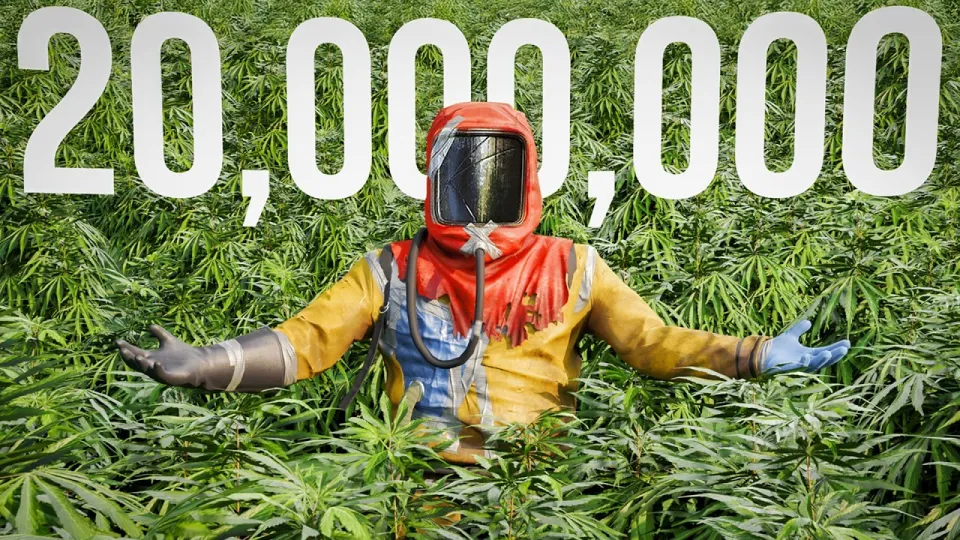
Video: I Became Rust's #1 Farmer...
Need articles like this for your video? They help promote it on YouTube and Google — order them in the Telegram bot @sat_sit_bot. Articles with your video embedded are written and posted by the bot itself — on popular topical sites (no ads). Your first 50 articles are free.
· based on the channel JTeles
Rust farming at record scale means converting a small starting stockpile into millions of cloth within one wipe, and that is exactly what JTeles attempted: starting from 126,000 cloth and pushing toward 20,000,000 in seven days on a single server. The run turned into a full server conflict, with viewers recruited as farmhands, a mega base that lagged the server, and a large clan that tried to shut the project down. Anyone who wants to follow similar survival sandbox experiments can start with the same free War Thunder registration and bonus the channel promotes, then come back to see how the cloth run was organized.
What the 20,000,000 cloth challenge actually required
The core of the challenge is simple math: 126,000 cloth is roughly 0.6% of the 20,000,000 target, so almost the entire stock had to be produced during the wipe rather than carried in. In Rust, cloth comes from hemp plants and from recycling clothing and other loot, which makes it a resource that scales with planted area, grow speed and the number of hands harvesting. Reaching eight figures in seven days means a farm that runs almost continuously, with planters refilled, crops harvested and the output stored somewhere safe from raiders. That is why the project was never a solo grind: it needed a production line, a storage plan and people online around the clock.
How viewers were turned into a farming crew
Rather than farming alone, the creator opened the server to viewers and organized them into a workforce. The video describes inviting viewers in to help build the biggest cloth farm in Rust, which changes the economics of the wipe: many players planting and harvesting in parallel multiply output far beyond what one account can do. It also creates the problems that make the run interesting. A large crew needs roles, a shared base, communication and trust, because every extra member is both a producer and a potential leak about what is being built and where the cloth is stored.
The mega farm, the lag and the base defense problem
A cloth farm at this scale stops being a small grow room and becomes a compound. The build grew so large and so developed that looking at it caused server lag, a detail viewers noticed immediately. That size has real costs in Rust: more planters and lights mean more entities for the server to track, and a bigger footprint is harder to hide from scouts. Defense becomes a full-time job, and the crew ended up holding the base while the creator was offline and asleep, which is the part of any wipe-long project that decides whether it succeeds or collapses overnight.
Why a Russian clan tried to stop the run
The project made enemies quickly. According to the video, a massive Russian clan found out what was being attempted and did everything it could to stop the farm from being finished, which produced the PvP, raids, base defense, farming and alliance play that fill the run. In Rust, a visible mega base with a known purpose is a target: raiders want the stored cloth and the loot inside, and rivals may simply want the project to fail. Holding a compound against a organized clan requires online coverage, turrets and traps, quick rebuilds, and sometimes diplomacy with other groups on the server.
Lessons for players attempting a large-scale farm
Anyone trying to repeat a cloth push should treat it as logistics rather than gardening. The practical checklist looks like this:
- Set a numeric target and track it, as with the 126,000 to 20,000,000 goal, so the crew knows whether the pace is enough.
- Build planters and lighting in multiples that can be refilled in one pass, and keep the harvest route short.
- Split storage so a single raid cannot take the whole stockpile.
- Recruit reliable players and give them shifts, because offline hours are when bases fall.
- Expect attention: a farm this size will be scouted, so plan defenses and alliances before the first raid, not after.
Questions viewers raised about the run
Viewers of the video focused on three things: the sheer size of the goal, the teamwork behind it, and the time investment. Many were impressed that clan members defended the compound while the creator slept, and others compared the grind to older, slower farming methods where every plant had to be placed and harvested by hand. There was also amusement at the moment the creator admitted going outside for the first time since wipe and finding it bright, a line that sums up how much of the seven days went into the farm. The scale of the base drew comments about server performance, and the general reaction was that the goal was madness in the best sense.
All links from the video
- Free War Thunder bonus for PC and consoles
- War Thunder mobile registration
- JTeles Discord server
- JTeles on Twitter/X
- JTeles on TikTok
Final takeaway on Rust's cloth farming record attempt
The run shows that Rust rewards organization as much as raw playtime: 126,000 starting cloth became a realistic shot at 20,000,000 only because viewers were recruited, the farm was built at industrial scale and the crew defended it around the clock. It also shows the cost of visibility, since a compound big enough to lag the server is a magnet for clans and raiders. The video breakdown by JTeles captures both sides of that trade, the production line and the siege. If survival sandbox experiments like this are your thing, use the War Thunder sign-up link to grab the bonus and keep an eye on the channel for the next wipe.
Key takeaways
- JTeles started a single Rust wipe with 126,000 cloth and set a target of 20,000,000 cloth in seven days.
- Viewers were invited onto the server to help build what the video calls the biggest cloth farm in Rust.
- A large Russian clan learned about the project and attacked the farm with PvP, raids and base defense fights.
- The finished compound grew so large that rendering it caused server lag when players looked at it.
- Clan members defended the base while the creator was offline and asleep, keeping the farm alive.
Questions & answers
How much cloth did JTeles start with in the Rust farming challenge?
The run began with 126,000 cloth already in hand. From there the goal was to reach 20,000,000 cloth within a single wipe, a span of seven days, which meant nearly all of the final total had to be produced on the server during that time.
How did viewers help with the cloth farm?
Viewers were invited onto the server to join the project and help build and run the farm. With many players planting, harvesting and defending in parallel, the crew could produce far more cloth than a solo player, while also covering the base during offline hours.
Why did a clan attack the farm?
A large Russian clan learned about the attempt to build the biggest cloth farm in Rust and tried to stop it. A huge compound full of stored cloth is a valuable raid target, and a known mega project also invites rivals who simply want it to fail.
Is it possible to farm millions of cloth without a big clan?
It is possible but slow. Large yields depend on planted area, grow speed and harvest frequency, so a solo player needs compact, efficient planter setups and split storage. The main risk is offline time, since an undefended farm can be emptied in a single raid.
Source: I Became Rust's #1 Farmer... · Markdown version